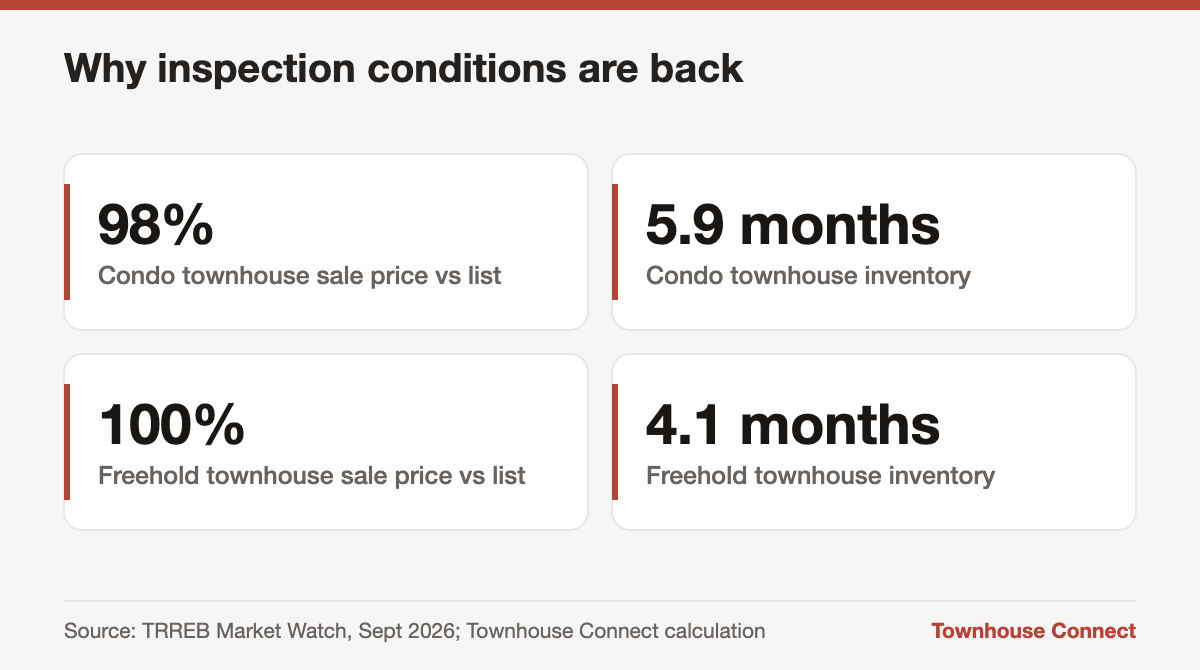
A townhouse inspection covers everything a house inspection does, plus the items that come with attached living: whether the party wall runs continuously through the attic, how your roof meets your neighbours’, where shared drainage goes, and which parts are actually yours to fix. With GTA condo townhouses selling at an average of 98% of list and freehold townhouses at 100% in September 2026, buyers once again have room to make offers conditional on an inspection. Use this 12-point checklist to make it count.
Key takeaways
- Ask the inspector to check the party wall in the attic: it should be continuous to the underside of the roof.
- Roof seams between neighbouring units, and flashing where roofs meet, are classic townhouse leak points.
- In Ontario, check whether the water heater or furnace is rented; contracts often transfer with the home.
- For condo townhouses, match the inspection findings against the declaration to see who pays.
- A slower market makes inspection conditions realistic again, so use them.
Why a townhouse inspection is different
An inspector looks at the same systems in every home: structure, roof, water, heating, electrical and plumbing. In a townhouse, several of those systems touch or are shared with the neighbours. A problem in the attic of the unit next door can become your problem, and some repairs need your neighbours’ cooperation to fix properly.
Ownership also changes the meaning of each finding. A worn roof in a freehold townhouse is a cost to you. The same roof in a condo townhouse may be the corporation’s job, paid from the reserve fund. Our post on who fixes what in a townhouse explains the split.
The 12-point townhouse inspection checklist
Structure and shared walls
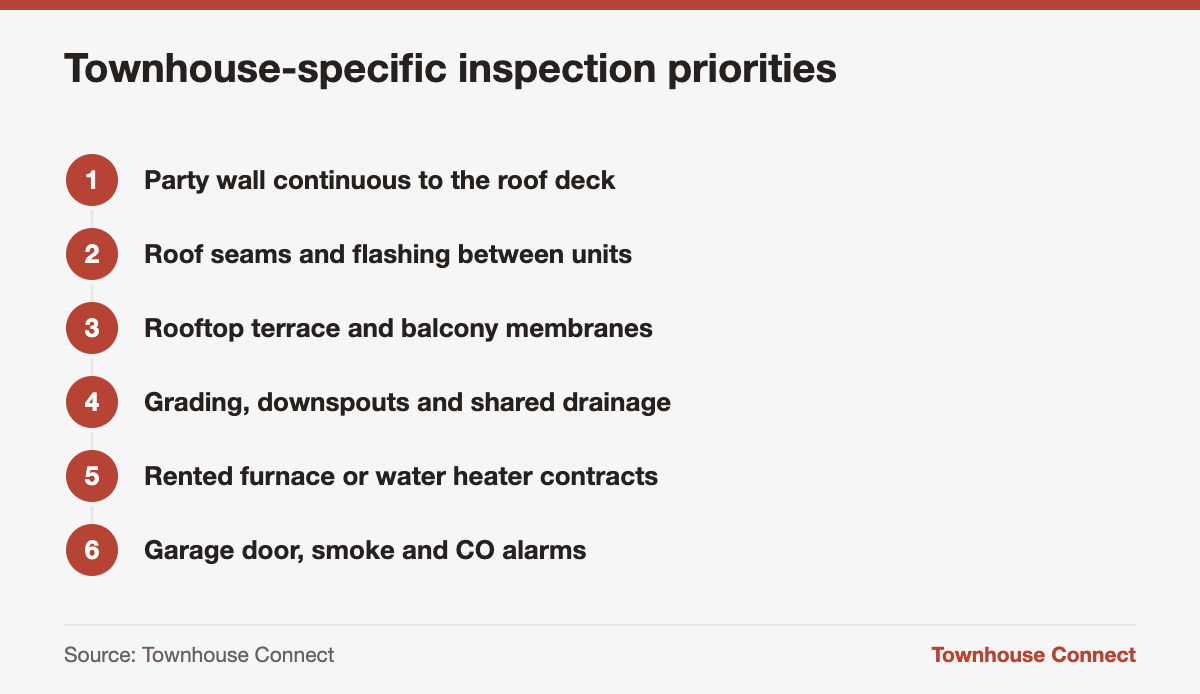
- Party wall in the attic. The wall between units should run continuously from the foundation to the underside of the roof deck, acting as a fire and sound separation. Gaps, missing sections or openings for wiring and ducts are worth flagging, especially in older townhouses.
- Foundation and basement walls. Look for cracks, efflorescence and damp patches, including on the shared wall. Moisture at the base of a shared wall can come from either side.
- Stairs and railings. Townhouses have a lot of stairs. Check for loose railings, uneven steps and missing handrails, particularly on basement and rooftop stairs.
Roof, attic and exterior
- Roof condition and seams. Note the age and condition of your section, and how it joins the neighbours’. If one section is new and the next is old, the joint needs close attention.
- Flashing, parapets and step changes. Where one roof is higher than the next, or where a party wall rises above the roofline, flashing failures cause leaks.
- Rooftop terraces and balconies. Common on stacked and back-to-back townhouses. Ask about the waterproofing membrane, drainage and any history of leaks into the unit below.
- Windows and doors. Failed seals, soft frames and drafts. In a condo townhouse, check whether these are owner or corporation items before negotiating.
Water and drainage
- Grading and downspouts. Water should drain away from the foundation, not toward your unit or the neighbour’s. On rows where yards slope toward a shared swale or catch basin, check that it is clear.
- Sump pump and backwater valve. Note whether they exist and work. Ask about any history of basement water, and confirm what your insurance will cover.
Systems and safety
- Furnace, air conditioner and water heater. Note age and condition, and ask whether any are rented. Rental contracts for water heaters and HVAC equipment are common in Ontario and often pass to the buyer, so get a copy and include it in your offer review.
- Electrical panel and wiring. Check panel capacity, signs of overheating and DIY wiring, particularly in finished basements.
- Garage-to-house separation and alarms. Most townhouses have an integral garage. Check the door between the garage and the house, and confirm there are working smoke alarms on every storey and carbon monoxide alarms where required.
Tip: Ask the inspector to look at the neighbours’ side of things from your property: their roof, eavestroughs, grading and any visible attic openings at the party wall. You cannot inspect their home, but you can see enough from your attic, roof edge and yard to know whether their problems might become yours.
Extra checks for condo and POTL townhouses
A home inspection of a condo townhouse looks at the unit. The building-wide picture comes from the status certificate and the reserve fund study, so read the two together.
- Match each inspection finding to the declaration. Is the roof, window or deck the corporation’s responsibility or yours?
- Check the reserve fund study for when the roofs, windows and roads are due for replacement.
- Look for special assessments and legal actions in the status certificate, which costs no more than $100 and must be delivered within 10 days.
- For POTLs, check the declaration for owner duties such as landscaping, fencing and drainage features on your lot.
Our condo townhouse reserve fund checklist covers the financial side in detail.
New townhouses: the pre-delivery inspection
For a newly built townhouse, you will do a pre-delivery inspection with the builder before you take possession, recording any defects or incomplete work. After closing, Tarion’s statutory warranty applies. According to Tarion’s coverage summary, that includes a one-year warranty on workmanship and materials, a two-year warranty on items such as water penetration and the electrical, plumbing and heating systems, and a seven-year warranty on major structural defects.
Many buyers of new townhouses hire their own inspector before the first-year warranty ends, so defects are reported in time. If you bought a new freehold or POTL townhouse, also make sure your purchase was registered with Tarion; our post on the 45-day Tarion rule explains why.
Using the inspection in a 2026 negotiation
When buyers compete hard, inspection conditions disappear. That is not the market most townhouse buyers face this fall. In September, condo townhouses across the GTA had about 5.9 months of inventory and freehold townhouses about 4.1 months, according to TRREB.
- Make the offer conditional on an inspection, typically for a few business days.
- Focus negotiation on material issues: roof, water, structure, major systems and safety. Do not renegotiate over cosmetic items.
- Get repair estimates for big findings before asking for a price reduction or credit.
- For condo townhouses, do not ask for a credit on items the corporation will fix.
Our list of five costly buyer mistakes includes waiving conditions without need. In this market, you rarely have to.
Frequently asked questions
What should I look for when inspecting a townhouse?
Beyond the usual roof, structure, water and systems checks, focus on what is shared: the party wall in the attic, the roof seams and flashing between units, shared drainage and grading, and noise transfer. For condo and POTL townhouses, compare the findings with the declaration and reserve fund study to see who is responsible for each repair.
Do I need a home inspection for a condo townhouse?
It is strongly recommended. Even if the corporation maintains the roof and exterior, you are responsible for the unit’s interior, systems and any improvements, and the inspection may reveal building issues the corporation needs to address. Read it with the status certificate and reserve fund study so you understand both your costs and the corporation’s.
Should I inspect a brand-new townhouse?
Many buyers do. You will attend a pre-delivery inspection with the builder before possession, and Tarion’s warranty covers defects for set periods after that. An independent inspection before the first-year warranty ends helps you find and report issues while they are still covered. It is particularly useful for roofs, attics and rooftop terraces you cannot easily check yourself.
Ready to make an offer? Search GTA townhouses and read our townhouse buyer’s guide for how inspections fit into the offer process.
This article is general information as of October 2026, not legal, tax, mortgage or financial advice. Rules and numbers change, so confirm the details for your situation with a licensed professional.